
Introduction
The BS Anesthesia program prepares students with the knowledge and clinical skills required to provide safe and effective anesthesia care before, during, and after surgical procedures. Through a combination of academic instruction and hands-on clinical training, students develop the competence to work alongside anesthesiologists and multidisciplinary healthcare teams in modern surgical settings.
Why choose Anesthesia
The BS Anesthesia program offers a balanced combination of classroom learning and clinical training to prepare students for a specialized career in perioperative care. With experienced faculty, modern training facilities, and extensive hospital exposure, students gain the knowledge, confidence, and practical skills needed to support safe anesthesia services and patient care.
Objectives
- Develop competent anesthesia professionals with strong clinical and technical skills.
- Prepare students to assist in the safe administration and monitoring of anesthesia.
- Promote ethical, patient-centered, and evidence-based healthcare practices.
- Strengthen critical thinking, communication, and teamwork in surgical settings.
- Encourage lifelong learning, research, and continuous professional development.
Career Scope And Opportunities
Graduates of the BS Anesthesia program have excellent career opportunities in hospitals, surgical centers, and specialized healthcare facilities.
Career opportunities include:
- Anesthesia Technologist
- Operation Theatre (OT) Technologist
- Critical Care & ICU Technologist
- Emergency & Trauma Care Technologist
- Pain Management Assistant
- Clinical Instructor
- Healthcare Quality Officer
- Research Assistant
- Medical Equipment Specialist
- Higher Studies and Professional Specialization
Practical Training, Internship & Research Exposure
Students receive hands-on training in affiliated hospitals and operating theatres under the supervision of experienced anesthesiologists and healthcare professionals. Clinical rotations, internships, and research activities help develop practical skills, professional competence, and evidence-based anesthesia practice.

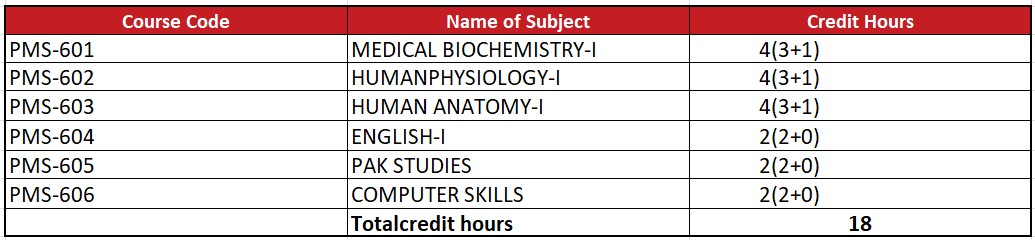
Semester I
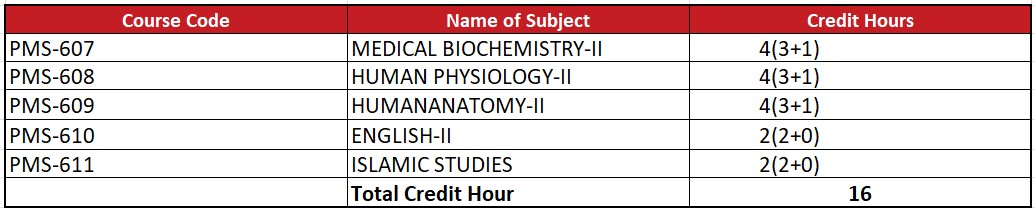
Semester II
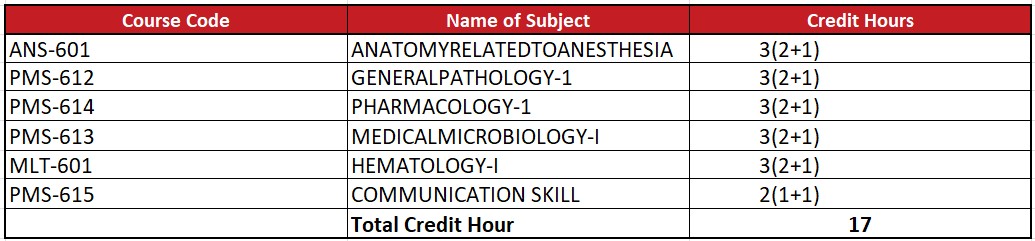
Semester III
Semester IV
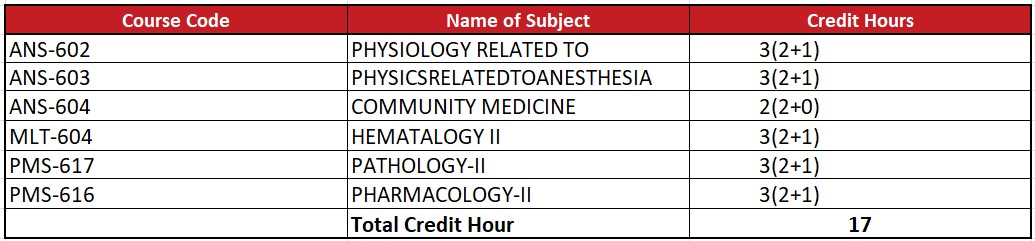
Semester V
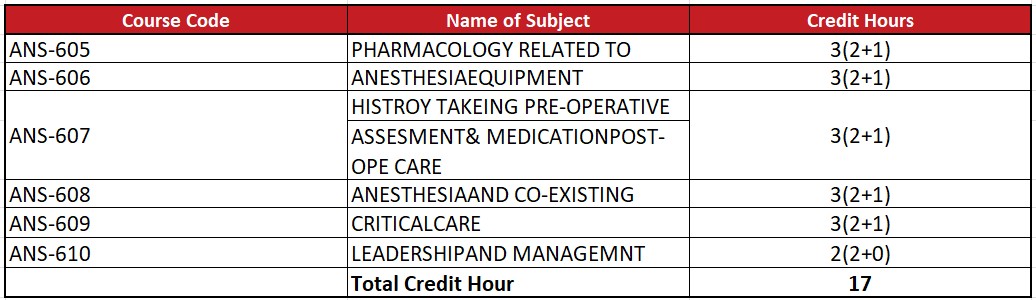
Semester VI
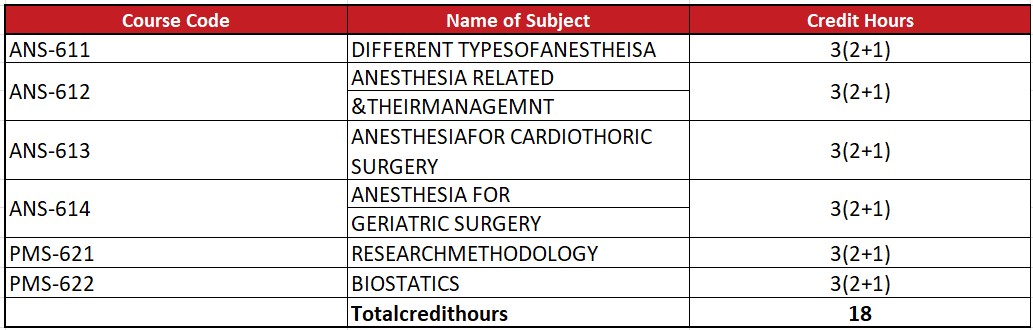
Semester VII
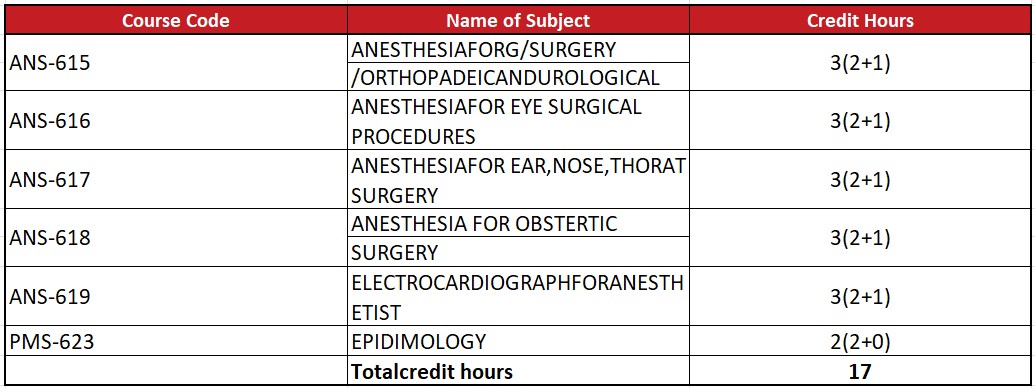
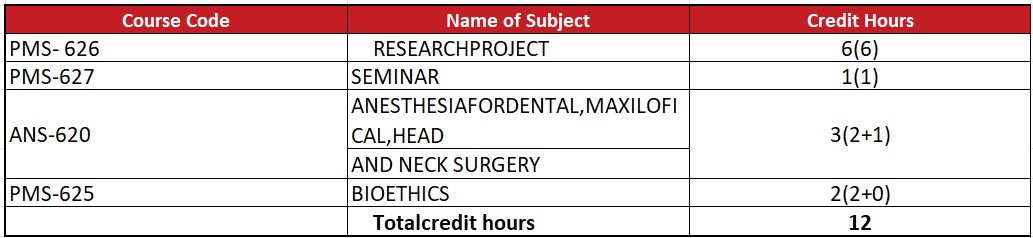
Semester VIII